
EV charger installation on the Wirral
Home electric vehicle chargers installed properly, with your supply, earthing and consumer unit checked first so there are no surprises.
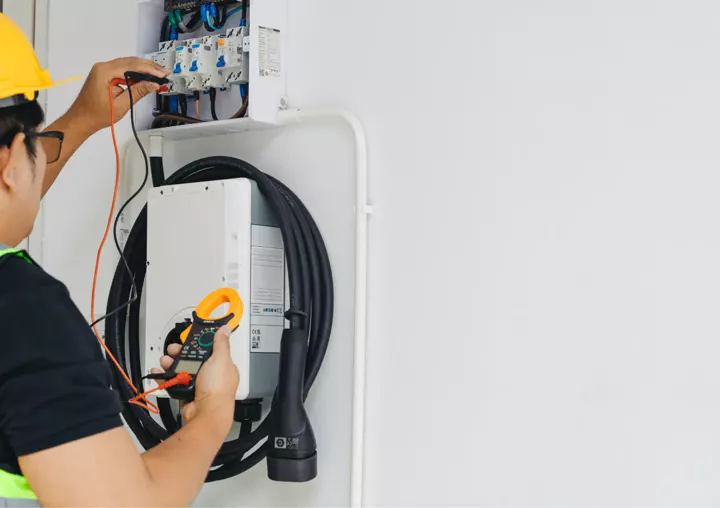
Charging at home is the cheapest and easiest way to run an electric car, but a charger draws a heavy current for hours at a time. It needs its own circuit, the right protection and a supply that can cope, so the installation matters as much as the charger on the wall.
We install home EV chargers across the Wirral, Merseyside and Chester. Before recommending anything, we check your incoming supply, your earthing arrangement and your consumer unit, so you know upfront whether anything needs upgrading first. Every installation is tested, certified and notified under Part P.
What we check before we install
A proper survey is what separates a safe charger installation from a quick one:
- Off-street parking and where the car sits
- Your main fuse and total household demand
- The earthing arrangement (PME or otherwise)
- Room in the consumer unit for a new circuit
- The best cable route from board to charger
- Wall construction where the charger mounts
- Wi-Fi signal for smart charging
- Whether the network operator must be told
Why the supply and earthing matter
A typical 7kW home charger draws around 32 amps continuously. Added to an electric shower, an oven and a tumble dryer, that can push some homes close to the limit of their main fuse. Where that is a risk, we can fit a charger with load management, which turns the charging rate down automatically when the house is busy.
Many UK homes have a PME earthing arrangement. The wiring regulations, BS 7671 Section 722, set out specific rules for EV charging on PME supplies because of the risk if the supply neutral is ever lost. Many modern chargers include built-in protection for this; in other cases an earth electrode may be needed. We check which applies to your home and explain it before quoting.
Chargers are normally notified to the local network operator, and we can advise what is needed for yours.
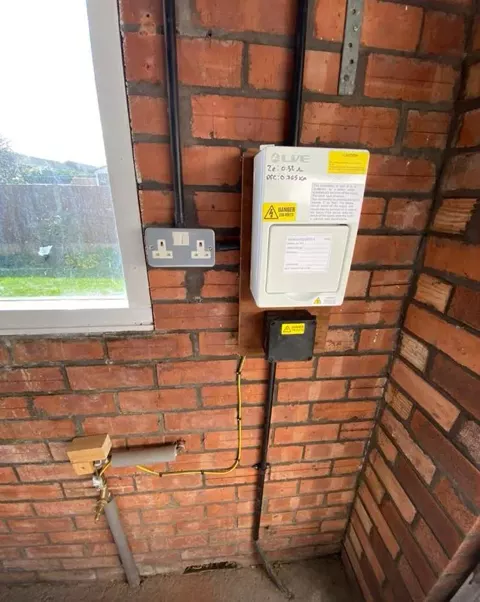
How an EV charger installation works
Survey
Photos or a visit to check the supply, earthing, consumer unit and where the car parks.
Clear quote
A written quote that says exactly what is included, and whether any upgrade is needed first.
Install
A dedicated circuit with the right protection, a neat cable route and the charger fixed securely.
Test and hand over
Full testing, a certificate, Part P notification, and a walkthrough of the charger and its app.
Smart chargers and choosing the right one
Home chargers sold in Great Britain must be smart chargers under the Electric Vehicles (Smart Charge Points) Regulations 2021. They can be scheduled for cheaper off-peak tariffs, tracked from an app and, in some cases, managed to avoid overloading your supply. Some lock to one car maker’s app; others work with any car.
Where the charger goes matters too. It should be close to where the car’s charging port sits when parked, out of the way of pedestrians and car doors, and reachable without the cable trailing across a public footpath. A tethered cable is convenient; an untethered socket looks tidier and suits households that may change car.
We will talk you through tethered and untethered chargers, cable length, where the unit is best mounted and how you want to use it, and recommend something that suits your car, your driveway and your budget rather than pushing a single brand.
If you are also thinking about outdoor sockets or lighting on the driveway, it is often sensible to plan them at the same time. Planning ahead and getting it right first time is the discipline the Navy taught us, and it applies to a charger as much as anything.
Do not charge from an extension lead
The portable “granny” cable that comes with many cars is fine for occasional use from a sound socket, but never run it through an extension lead or a reel. They are not designed for hours of high current and can overheat. A dedicated charger on its own circuit is the safe long-term answer.
EV charger questions
All questionsAre you a registered electrician?
Yes. We are NAPIT approved and registered under the Part P competent person scheme, so notifiable work is certified and registered with building control for you. Every job is tested and you get the right certificate for it: an Electrical Installation Certificate for new circuits and rewires, a Minor Works Certificate for smaller jobs, or an EICR for an inspection.
What do I need for a home EV charger?
Off-street parking, a suitable supply and a consumer unit that can take the extra circuit. We check your supply, earthing and fuse board before recommending anything, so the charger is installed safely and you know upfront if anything needs upgrading first.
EV charger installation across the Wirral
We install home EV chargers in all of these towns, plus the wider Merseyside and Chester area.
- Birkenhead4 miles from our Upton base
- Wallasey3 miles from our Upton base
- Moreton1 mile from our Upton base
- Hoylake3 miles from our Upton base
- West Kirby3 miles from our Upton base
- Heswall4 miles from our Upton base
- Bebington5 miles from our Upton base
- Bromborough6 miles from our Upton base
- Neston7 miles from our Upton base
- Ellesmere Port11 miles from our Upton base
- Chester16 miles from our Upton base
Related services
-
Fuse board upgrades
Old fuse box replaced with a modern consumer unit with RCD protection, tested and certified to current regulations. Find out more -
Outdoor lighting and electrics
Garden lighting, outdoor sockets and power to sheds, garages and garden rooms, all weatherproof and RCD protected. Find out more -
EICR reports and certificates
Electrical Installation Condition Reports for homeowners, buyers and landlords, with clear findings and any remedial work quoted. Find out more
Get an EV charger quote
Send us a photo of your fuse board, your meter and where the car parks, plus the charger you have in mind if you have one. We will come back with a clear quote.
- Call 07845 087406Straight through to the electrician
- WhatsApp usYour area, the job and a photo if you have one
- Emailroyalelectrical1@outlook.com
10% off for blue light and care sector workers. Just mention it.